Archives
- 2026-06
- 2026-05
- 2026-04
- 2026-03
- 2026-02
- 2026-01
- 2025-12
- 2025-11
- 2025-10
- 2025-09
- 2025-03
- 2025-02
- 2025-01
- 2024-12
- 2024-11
- 2024-10
- 2024-09
- 2024-08
- 2024-07
- 2024-06
- 2024-05
- 2024-04
- 2024-03
- 2024-02
- 2024-01
- 2023-12
- 2023-11
- 2023-10
- 2023-09
- 2023-08
- 2023-07
- 2023-06
- 2023-05
- 2023-04
- 2023-03
- 2023-02
- 2023-01
- 2022-12
- 2022-11
- 2022-10
- 2022-09
- 2022-08
- 2022-07
- 2022-06
- 2022-05
- 2022-04
- 2022-03
- 2022-02
- 2022-01
- 2021-12
- 2021-11
- 2021-10
- 2021-09
- 2021-08
- 2021-07
- 2021-06
- 2021-05
- 2021-04
- 2021-03
- 2021-02
- 2021-01
- 2020-12
- 2020-11
- 2020-10
- 2020-09
- 2020-08
- 2020-07
- 2020-06
- 2020-05
- 2020-04
- 2020-03
- 2020-02
- 2020-01
- 2019-12
- 2019-11
- 2019-10
- 2019-09
- 2019-08
- 2019-07
- 2019-06
- 2019-05
- 2019-04
- 2018-07
-
Primases are classified into two major groups first the DnaG
2020-02-04

Primases are classified into two major groups: first, the DnaG primases, found in bacteria and bacteriophages, and second, the archaeoeukaryotic primases. Remarkably, bacterial and archaeoeukaryotic primases have no structural similarity and, presumably, evolved independently (Leipe et al., 1999). T
-
Taken together our results demonstrate that the changes of
2020-02-04
Taken together, our results demonstrate that the changes of striatal dopamine release and locomotor activity observed following chronic nicotine treatment and consequent acute withdrawal are mediated by CRF1, but not CRF2. Previous studies have already indicated that blocking CRF1 would prevent some
-
Mitochondrial DNA Isolation Kit mg The most important cytoto
2020-02-04
The most important cytotoxic lesion formed by the nitrogen mustards is generally considered to be the DNA–DNA interstrand cross-link 12, 13. DNA–DNA interstrand cross-links are thought to exert their cytotoxic effects by inhibiting DNA duplex strand separation, progression of the Mitochondrial DNA I
-
Unlike previous studies examining COMT
2020-02-04
Unlike previous studies examining COMT genotyping in healthy controls seeking to explain impulsive behaviors, this study sought to examine COMT genotypes in a large sample of individuals with varying levels of gambling behavior to determine whether COMT homoharringtonine sale was associated with dif
-
What is the predominant mechanism underlying the benefits of
2020-02-04
What is the predominant mechanism underlying the benefits of udenafil, i.e. the vascular vs. myocardial effect? Lewis et al. suggested that the benefit of sildenafil in HFrEF would be derived from augmented RV systolic function that mainly results from pulmonary vasodilation, suggestive of the ‘vasc
-
Primary renal PNET was first reported
2020-02-04
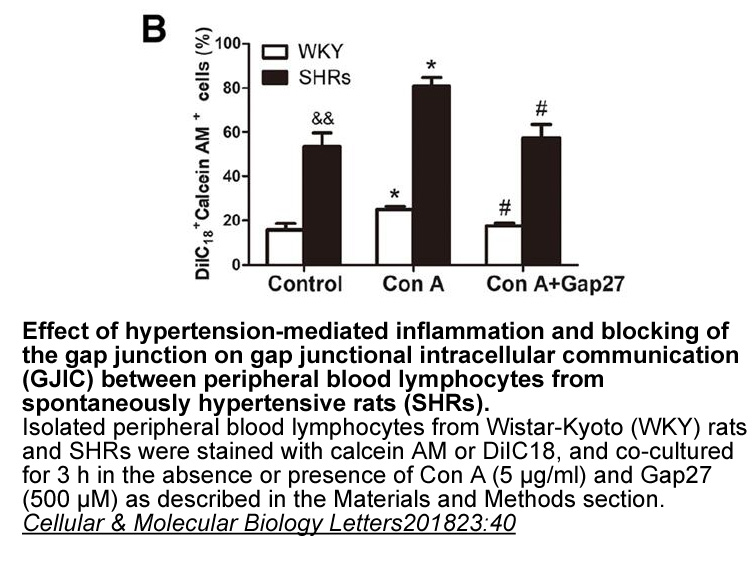
Primary renal PNET was first reported by Seemayer et al in 1975. The possible etiology of rPNET is based on the theory of neural cell intussusception in the kidney during development that initiates the tumorigenesis. rPNET most commonly affects young adults, with a mean age of 30.4 years and male pr
-
br Conclusions br Declaration of
2020-02-04
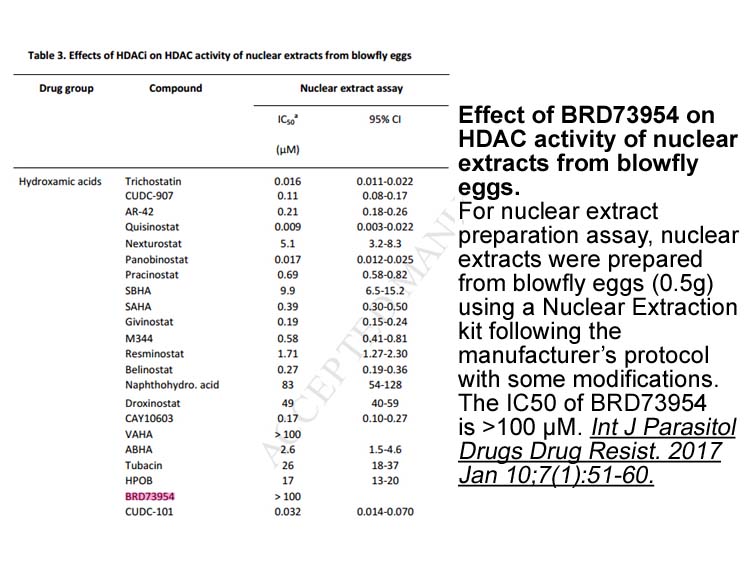
Conclusions Declaration of interest Acknowledgements Introduction Uncorrected obesity has been a major health problem and the prevalence of obesity is fast rising reaching an epidemic proportion [[1], [2], [3]]. Ample of clinical and experimental evidence has suggested that obesity leads
-
Because EBI is expressed on the major subsets
2020-02-04
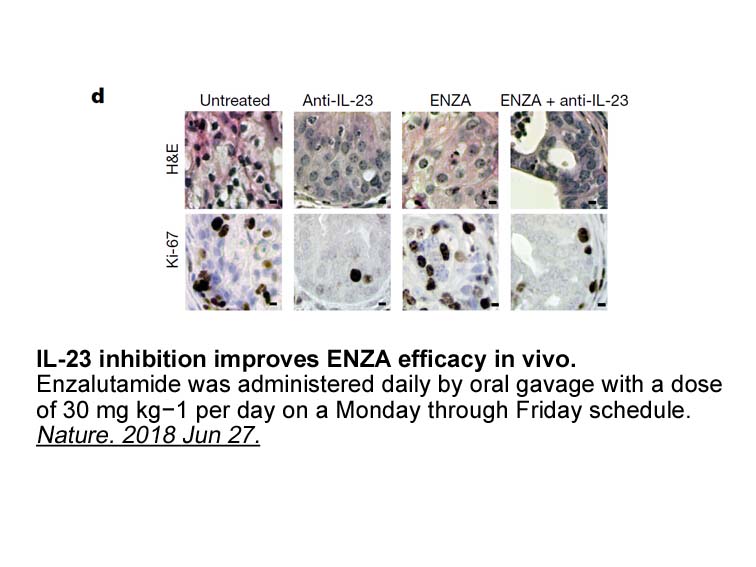
Because EBI2 is expressed on the major subsets of immune cells, and small molecule antagonists for EBI2 were recently described (Benned-Jensen et al., 2013, Gessier et al., 2014), EBI2 constitutes a tempting drug target reminiscent of the sphingosine-1-phosphate receptor superagonist fingolimod/Gile
-
Because of the important role of the
2020-02-04
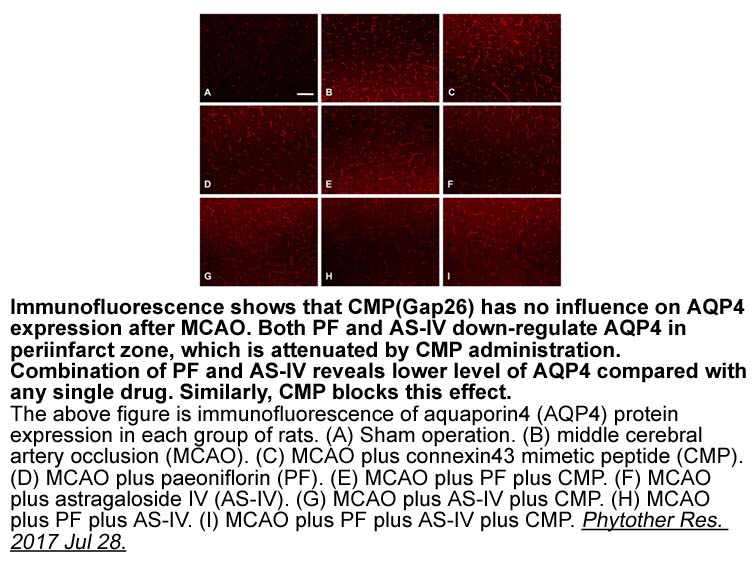
Because of the important role of the DDB1-CUL4B interaction for CUL4B-based E3 ligases, disruption of the DDB1-CUL4B interaction could be an effective approach to treat cancer. Therefore, we developed an in vitro HTS assay based on yeast cell growth inhibition to identify compounds that could disrup
-
UBA belongs to the non canonical E enzymes
2020-02-04
UBA5 belongs to the non-canonical E1 enzymes that lack a defined Cys domain but have the active-site Cys within the adenylation domain [24]. Similar to other E1 enzymes, UBA5\'s adenylation domain comprises an eight-stranded beta sheet that is surrounded by helices [21]. Moreover, like the ancestral
-
YM155 australia Structural homology modelling Intensive Phyr
2020-02-04
Structural homology modelling. Intensive Phyre2 modelling [44] was performed using the primary amino YM155 australia sequence of A1S_0222 as input to generate an atomistic 3D-homology model of A1S_0222. The fit to the SAXS data of the homology model as well as the fit to the data of the E. coli ade
-
An intriguing feature of the pre and
2020-02-04
An intriguing feature of the pre and postsynaptic processes at the level of the VTA that have been shown to be mediated by CRF2 receptors [9], [34] is that they are exerted only by agonists with high affinity for both CRF2 receptors and CRF-BP. The four endogenous peptides of the CRF system have hig
-
In the context of our ongoing studies to
2020-02-03
In the context of our ongoing studies to define the phytochemical and biological properties of oxyprenylated secondary metabolites of plant and fungal origin, we wish to report herein the investigation on the interaction of some natural and semisynthetic O-alkylcoumarins with promising ChE inhibitor
-
br Cytochrome P monooxygenases Cytochrome P monooxygenases
2020-02-03
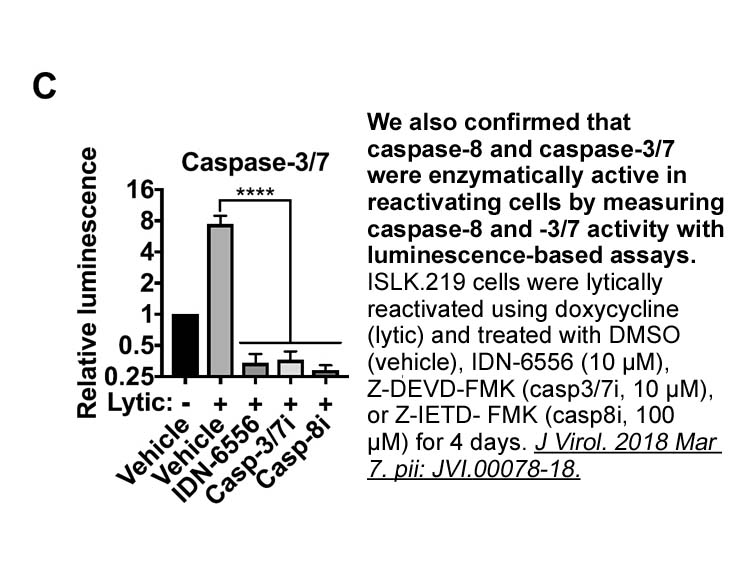
Cytochrome P450 monooxygenases Cytochrome P450 monooxygenases (P450s) belong to one of Nature’s most versatile group of enzymes for C–H functionalization and are able to perform challenging regioselective and stereoselective activations of remote, unactivated C(sp3)–H bonds, for which there are o
-
br STAR Methods br Acknowledgments We
2020-02-03
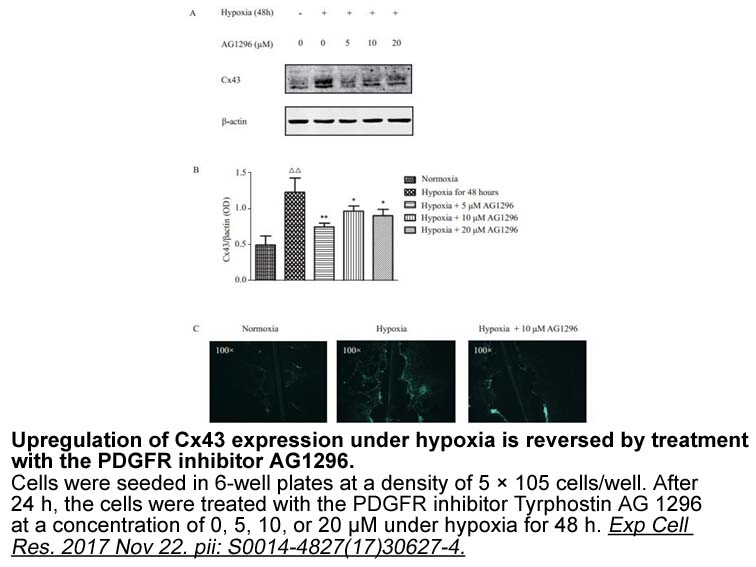
STAR★Methods Acknowledgments We are grateful to Matthias Mayer at ZMBH in Heidelberg for access to his CD-spectrometer and his help in data interpretation. Technical support by Wolfgang Weinig is gratefully acknowledged. This project was financially supported by the European Union as part of
16338 records 931/1090 page Previous Next First page 上5页 931932933934935 下5页 Last page